
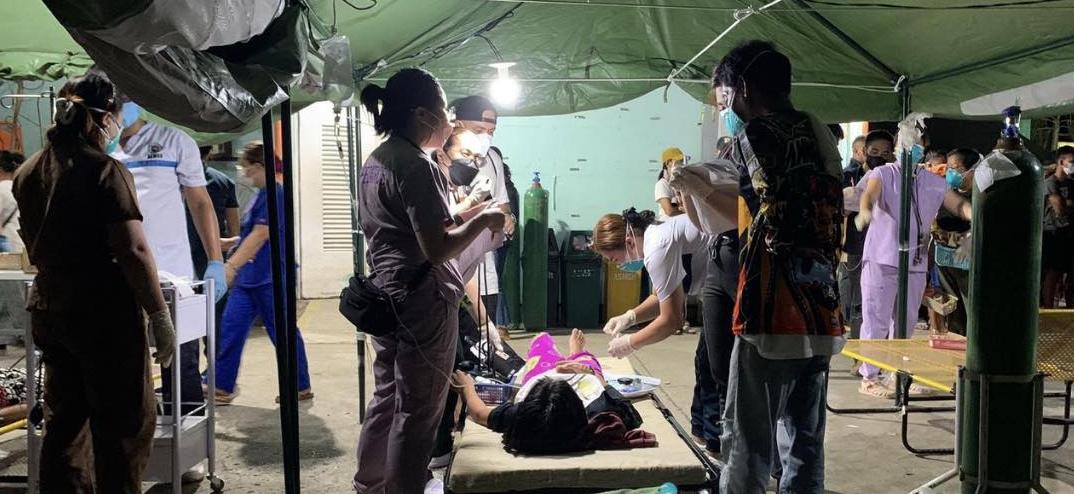
PENANG, Malaysia – Pesticide Action Network Asia Pacific (PANAP) strongly condemns the recent mass poisoning incident that took place at Pis-anan National High School in Sibalom, Antique, Philippines, which led to the hospitalisation of nearly 250 students on July 2, 2025. The toxicological analysis confirming the presence of cypermethrin, a Highly Hazardous Pesticide (HHP), in and around the school is deeply alarming and unacceptable.
Cypermethrin is a synthetic pyrethroid insecticide classified by PANAP as one of the Terrible Twenty, a list of the most toxic pesticides that pose severe threats to children. This chemical is known to be acutely toxic, especially to children, and is associated with a range of adverse health effects, including respiratory distress, neurotoxicity, endocrine disruption, immunotoxicity, and long-term impacts such as increased risk of breast cancer and male reproductive disorders. Its link to Parkinson’s disease further emphasises the grave consequences of exposure.
That traces of cypermethrin were found on classroom walls, doors, and vegetation surrounding the school indicate clear pesticide drift and environmental contamination, likely due to nearby agricultural spraying. The fact that a pesticide known for its hazardous properties could find its way into a space meant to be safe for learning is a gross violation of children’s rights and public safety. This case is not an isolated incident but reflects a broader and systemic issue related to the unregulated use of HHPs in farming and their proximity to residential and educational areas.
PANAP reiterates our long-standing call to the Philippine government and governments across the region to immediately phase out HHPs, including cypermethrin, and replace them with safe, sustainable, and community-driven agroecological practices. Schools, homes, and farms must be protected from the toxic impacts of industrial agriculture. Children, especially those in rural and farming communities, must no longer be put in harm’s way due to the irresponsible use of pesticides in the name of food production.
Part of our demand for accountability is the identification of the manufacturer and seller of the cypermethrin involved in this latest case of pesticide poisoning in the Philippines. Producers and sellers of cypermethrin include some of the world’s most prominent and most notorious agrochemical giants, such as BASF and Syngenta.
This tragic incident must serve as a wake-up call. We cannot continue to allow the lives, health, and futures of our children to be jeopardised by dangerous chemicals that have no place in a just and sustainable food system.
We call on all relevant authorities and policymakers to urgently take action, ban HHPs, ensure justice and accountability for those affected, and prioritise the protection of children and communities from toxic pesticide exposure. We urge governments to adopt and support agroecological approaches that promote safe, sustainable, and poison-free food systems. As an immediate safeguard, we reiterate our call for the establishment of pesticide-free buffer zones of at least one kilometer around schools and other child-sensitive areas, as advocated by PANAP. Children must never again be placed in harm’s way due to pesticide drift and unsafe agricultural practices. ###
Reference: Sarojeni Rengam, Executive Director (sarojeni.rengam@panap.net)