
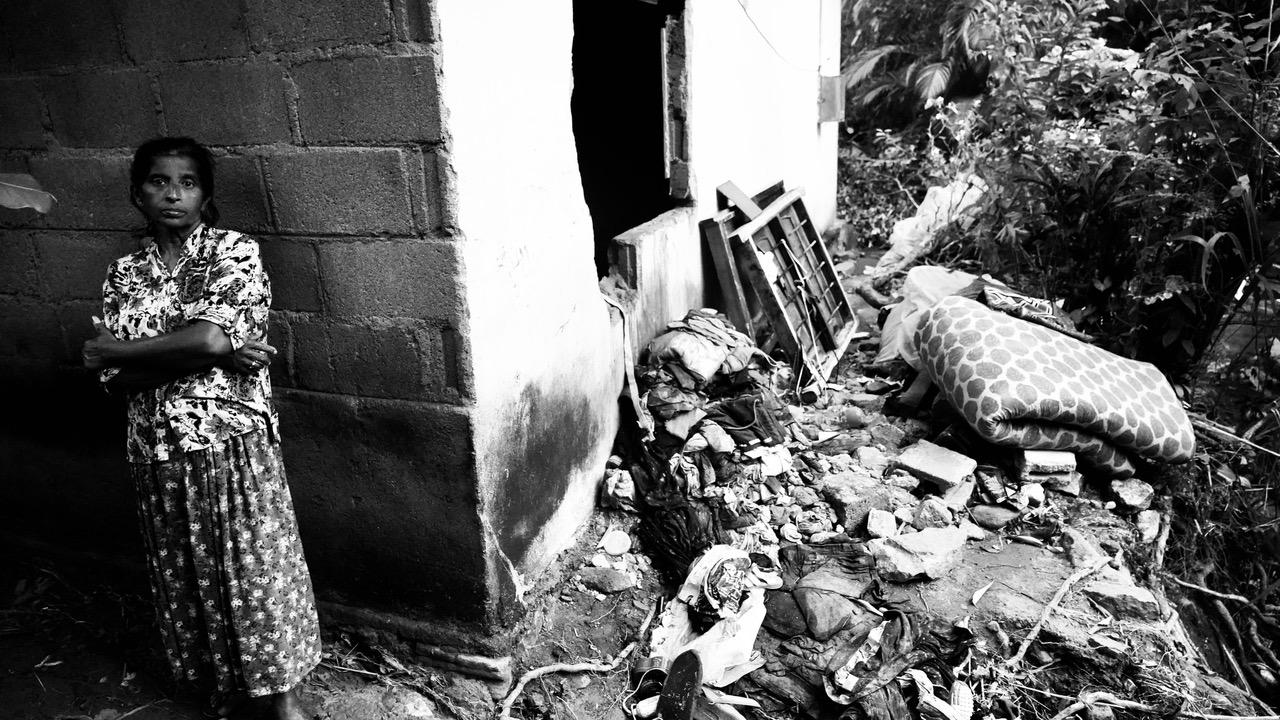

Seventeen years after the historic 2008 Asian Rural Women’s Conference declared “Rights, Empowerment, Liberation for Rural Women!”, ARWC gathers again, this time in Sri Lanka, amid deepening crises across food, land, climate, health, and civil-political rights. We stand in solidarity with the Sri Lankan people, especially the rural women, facing the devastating impacts of Cyclone Ditwah, which has claimed more than 600 lives, affected more than 2 million people, and destroyed homes, farms, fisheries, and livelihoods.
Ditwah exposes the systemic climate injustices confronting rural women across Asia – those who contribute the least to the climate crisis yet suffer its most devastating consequences. As climate disasters intensify alongside wars, militarism, occupation, debt-driven austerity, and corporate plunder, ARWC reaffirms its collective struggle against neoliberal globalisation, patriarchy, and imperialist domination.
These interconnected crises are not accidental or isolated; they are produced and borne by the imperialist system that commodifies our land, labour and the environment. Agribusiness monopolies, extractive industries, debt regimes and militarisation deepen rural women’s landlessness, unpaid care work, precarity, and exposure to violence, while stripping communities of food sovereignty and collective resilience.
Rural women face intensified risks, yet remain at the forefront of resistance
Rural and Indigenous women have long asserted how gender inequalities – such as unequal land rights, exclusion from information and early warning systems, lack of access to public resources and protection mechanisms, restrictive social norms, and persistent state neglect significantly heighten their vulnerability in disasters. These injustices are further compounded by women’s unpaid and unrecognised productive and care labour, land dispossession and marginalisation in land ownership and control, exclusion from decision-making, and the criminalisation of women who defend land, forests, and waters.
As a result, in some cases, women have been up to 14 times more likely than men to die in climate disasters. In the aftermath of disasters, rural women face heightened risks of gender-based violence, displacement, land loss, intensified unpaid care burdens, and the erosion of already fragile livelihoods in agriculture, fisheries, pastoralism, migrant work, and the informal economy.
Yet rural women are not victims – we are agents of change, leading in agroecology, seed saving, community care, and local climate adaptation while also occupying and reclaiming land, organising and strengthening cooperatives, associations and unions, and defending our territories from corporate and state plunder. Our leadership, however, is systematically undermined by governments that fail to protect us, and by corporations and wealthy nations whose extractive, fossil-fuel-driven economies fuel these climate disasters. We demand accountability: states must uphold our rights and safety, and those responsible for environmental destruction and climate injustice must be held liable.
The situation in Sri Lanka reflects a wider regional pattern. Across Asia, rural women face typhoons, droughts, landslides and floods that devastate homes, farms, and fisheries, as seen recently in India, Indonesia, Vietnam, and the Philippines. These disasters are intensified by land grabs, debt-driven austerity, development aggression, and corporate control over land, water and resources.
From Sri Lanka to the rest of Asia, rural women confront the same forces: corporate agribusiness, extractive industries, militarism, shrinking civic spaces, attacks on our sexual and reproductive health and rights (SRHR), and economic policies that prioritise profit over life. At the same time, imperialist countries, historically responsible for the climate crisis, continue to evade their obligations leaving poorer nations to absorb the loss and damage.
Amid these intersecting crises, rural women demand justice and the right to determine our land, food systems, bodies, and collective resistance.
Our Commitment
The 2025 ARWC General Assembly reaffirms our collective strength, solidarity, and resistance. Across Asia, rural women are reclaiming food systems; defending land, waters, and resources; building community care economies; and confronting global systems of exploitation, imperialist domination, and corporate control. Our struggles are inseparable from wider peoples’ movements for climate justice, food sovereignty and liberation.
ARWC commits to strengthen a powerful regional movement built from these local struggles – advancing food sovereignty; land, resource and labour rights; SRHR; and climate justice, while contributing to a broader people’s movements resisting imperialism – toward a future shaped by rural women’s collective power.