This webpage provides running updates into the global campaign to pressure the UN Food and Agriculture Organization (FAO) to sever its partnership with CropLife International, the world’s biggest association of pesticide manufacturers. The campaign is co-coordinated by PAN Asia Pacific and PAN North America, and supported by a broad network of civil society and Indigenous Peoples organisations.
Campaign materials (e.g. social media cards, infographics, messages) can be freely downloaded and used to share our message: Stop to the FAO-CropLife #ToxicAlliance!
14 June 2021
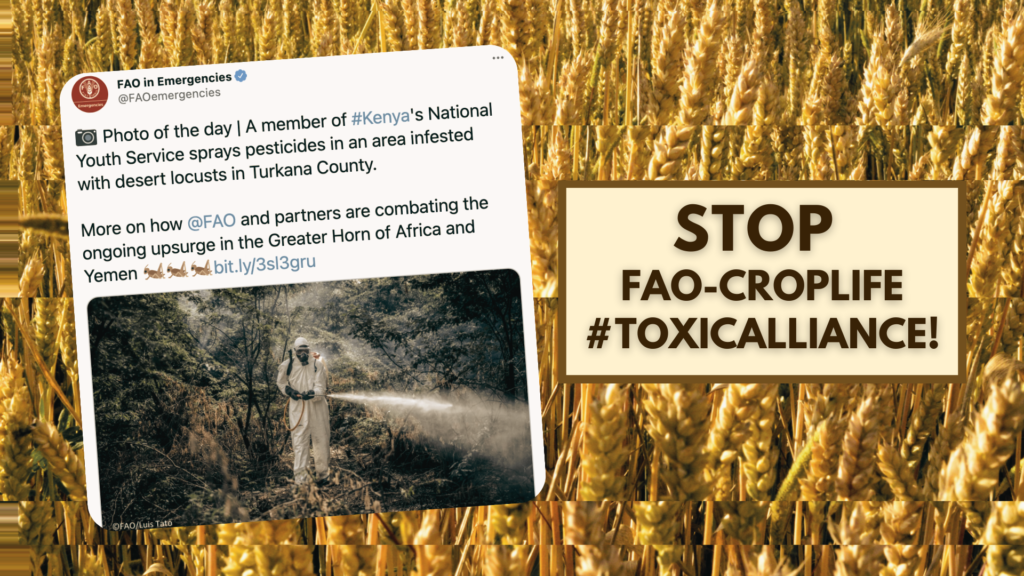
At the start of the 42nd session of the Food and Agriculture Organization Conference, PAN Asia Pacific urged the FAO to stop the use of Highly Hazardous Pesticides in its desert locust control program. Chlorpyrifos, a pesticide linked to brain damage and other neurodevelopmental disorders in children, is among the HHPs purchased and delivered by the FAO to governments, according to PANAP’s press release. The group urged the FAO anew to stop its #ToxicAlliance with FAO.
22 May 2021
On #WorldBiodiversityDay, a Day of Messaging was held to drumbeat how pesticide products sold by CropLife member companies are linked to unprecedented biodiversity loss and ecosystem collapse. Posts also looked back at how the pesticide industry employed a vast strategy to influence academics, beekeepers & regulators to keep selling bee-harming pesticides.
6 May 2021
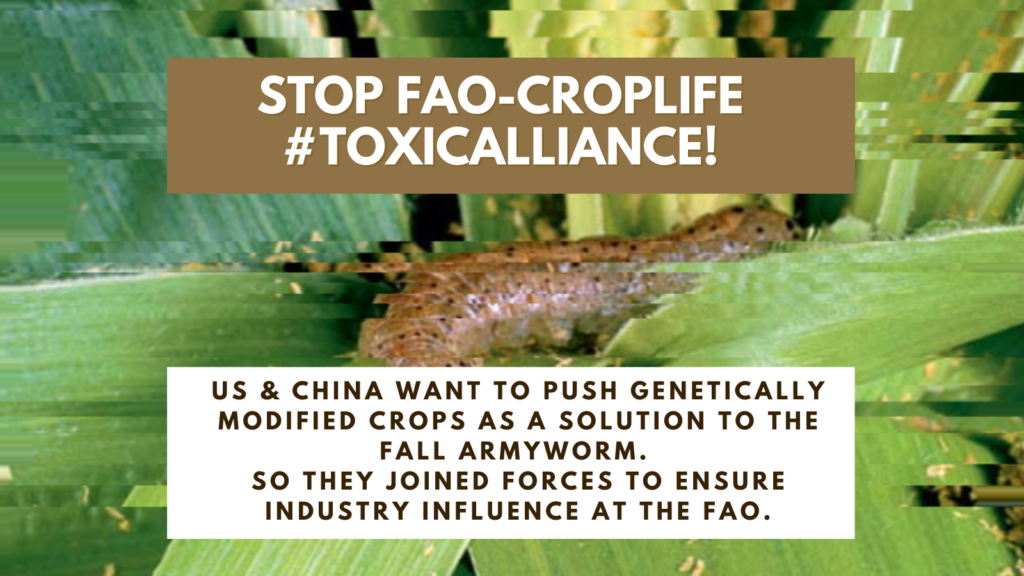
Former senior officer of the FAO Allan Hruska wrote a revelatory piece on how the US & China reached a “gentleman’s agreement” on working together at the FAO because of shared commercial interests. This may explain a shift in FAO’s approach to pest management–away from agroecology towards genetically modified crops.
Various organisations shared the story that puts additional context around the FAO-CropLife #ToxicAlliance, and continue to call on the UN agency to sever its alliance with the pesticide industry.
22 May 2021
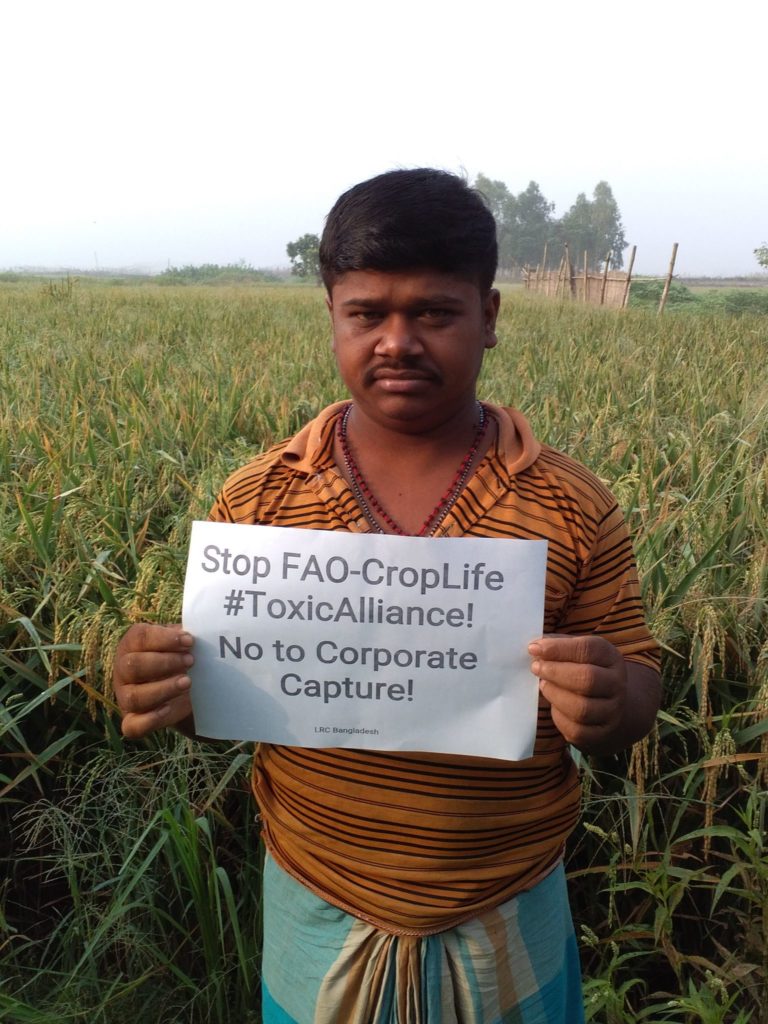
On Earth Day, various groups around the world mobilised for the Global Day of Action Against Corporate Capture of Food Systems. Farmers, especially from the Global South, carried the call to stop the FAO-CropLife #ToxicAlliance, as part of a bigger campaign against corporate capture and for just, equitable, healthy and sustainable food systems.
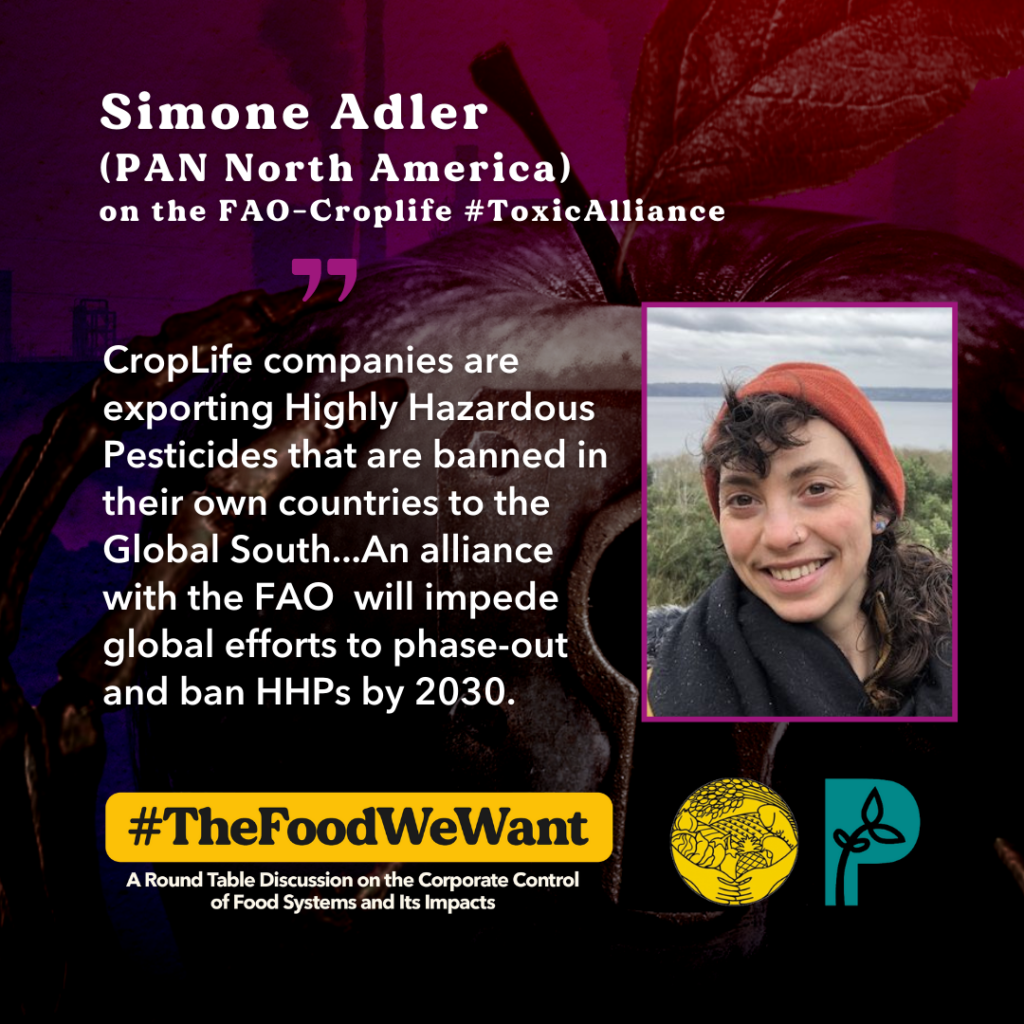
Simone Adler, organizing co-director of PAN North America, also spoke on the #ToxicAlliance at #TheFoodWeWant: A roundtable discussion on the corporate control of food systems and its impacts.
7 April 2021
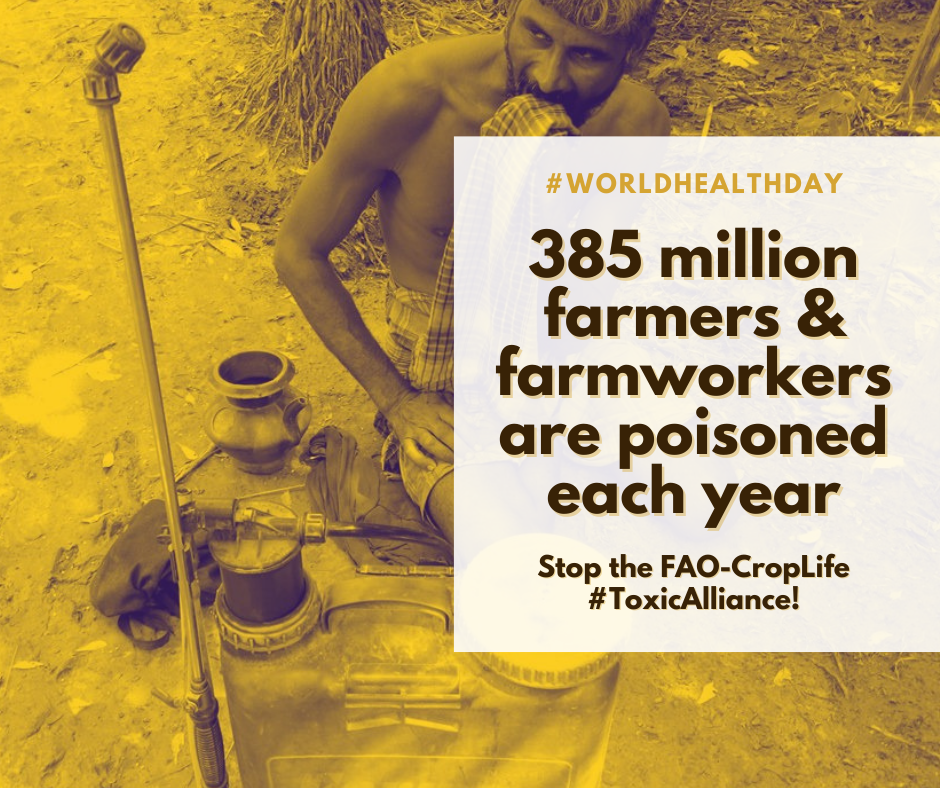
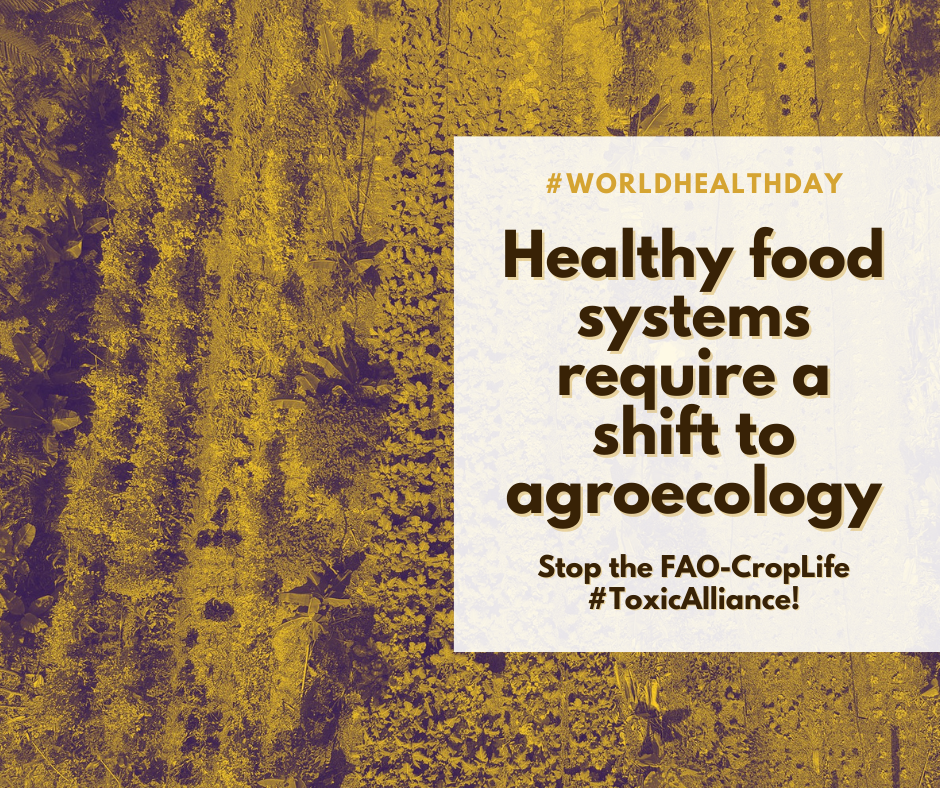
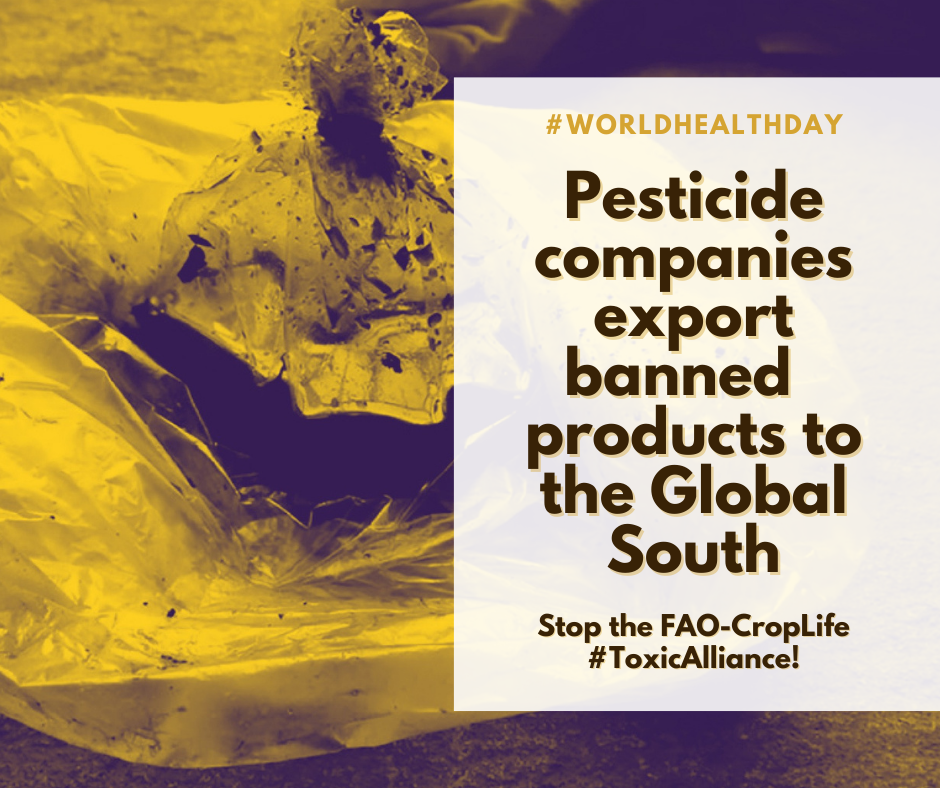
On #WorldHealthDay, a Day of Messaging was held to popularize the following messages, using social media cards and links to relevant information:
The need for agroecology- Organisations participating in the ongoing Committee on World Food Security (CFS) policy negotiations on Agroecological and other innovative approaches also brought our calls into the said policy space.
There were 155 total tweets of the hashtag #ToxicAlliance, over 100 retweets, and at least 23 original contributors — all in all potentially reaching 314,000 viewers.
19 March 2021
PAN International released its updated List of Highly Hazardous Pesticides (HHPs) and Consolidated List of Banned Pesticides, emphasising the urgent need for a global phase-out of HHPs by 2030. In a press release, the network said that the FAO-CropLife partnership will likely undercut the FAO’s support for agroecological alternatives to HHPs, and jeopardise global efforts to push for a complete ban of Highly Hazardous Pesticides by 2030.
26 February 2021
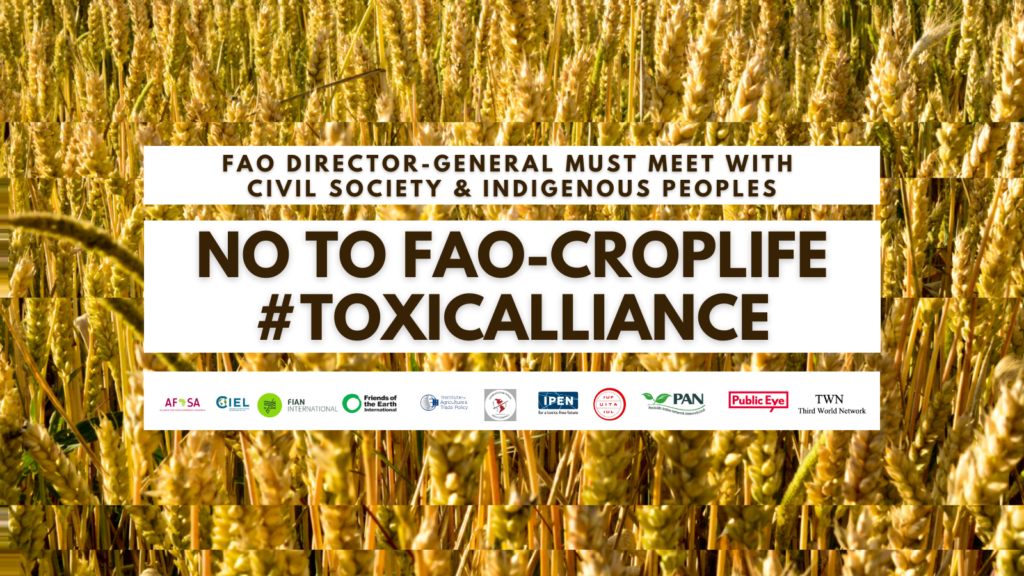
As a follow-up to the letter by 350 civil society and indigenous peoples, 11 organisations submitted a joint letter to FAO Director-General Qu Dongyu. They requested a formal meeting to discuss concerns over the FAO’s strategic partnership with CropLife. The organisations asked Qu to immediately abandon the #ToxicAlliance and to instead develop an integrated policy to prevent conflicts of interest.
The signatories against the #ToxicAlliance represent hundreds of thousands of farmers, fisherfolk, agricultural workers and other communities, as well as human rights, faith-based, environmental and economic justice institutions in 63 countries. The letter, addressed to FAO Director-General Qu Dongyu, pointed out that “reliance on hazardous pesticides is a short-term fix that undermines the rights to adequate food and health for present and future generations.”
An international group of 250 scientists and researchers also expressed concern about the proposed alliance and submitted a separate letter to the FAO Director-General. “UN institutions including the FAO should not be supporting a consortium of private businesses that stand to profit from the continued sale of products with documented harmful impacts on biodiversity including pollinators, ecosystem integrity and function, the health and livelihood of
peasant farmers, vulnerable agricultural workers, rural and Indigenous communities,” their letter said.
The Director-General responded with a letter to civil society on 27 November. However, he did not adequately address the concerns raised.