
The 64th Sessions of the UNFCCC Subsidiary Bodies (SB64) in Bonn took place as climate disasters, biodiversity loss, land degradation, food insecurity, and rural poverty were worsening across Asia and the Pacific. Many hoped these meetings would lead to real progress on agriculture, food security, adaptation, just transition, and climate finance.
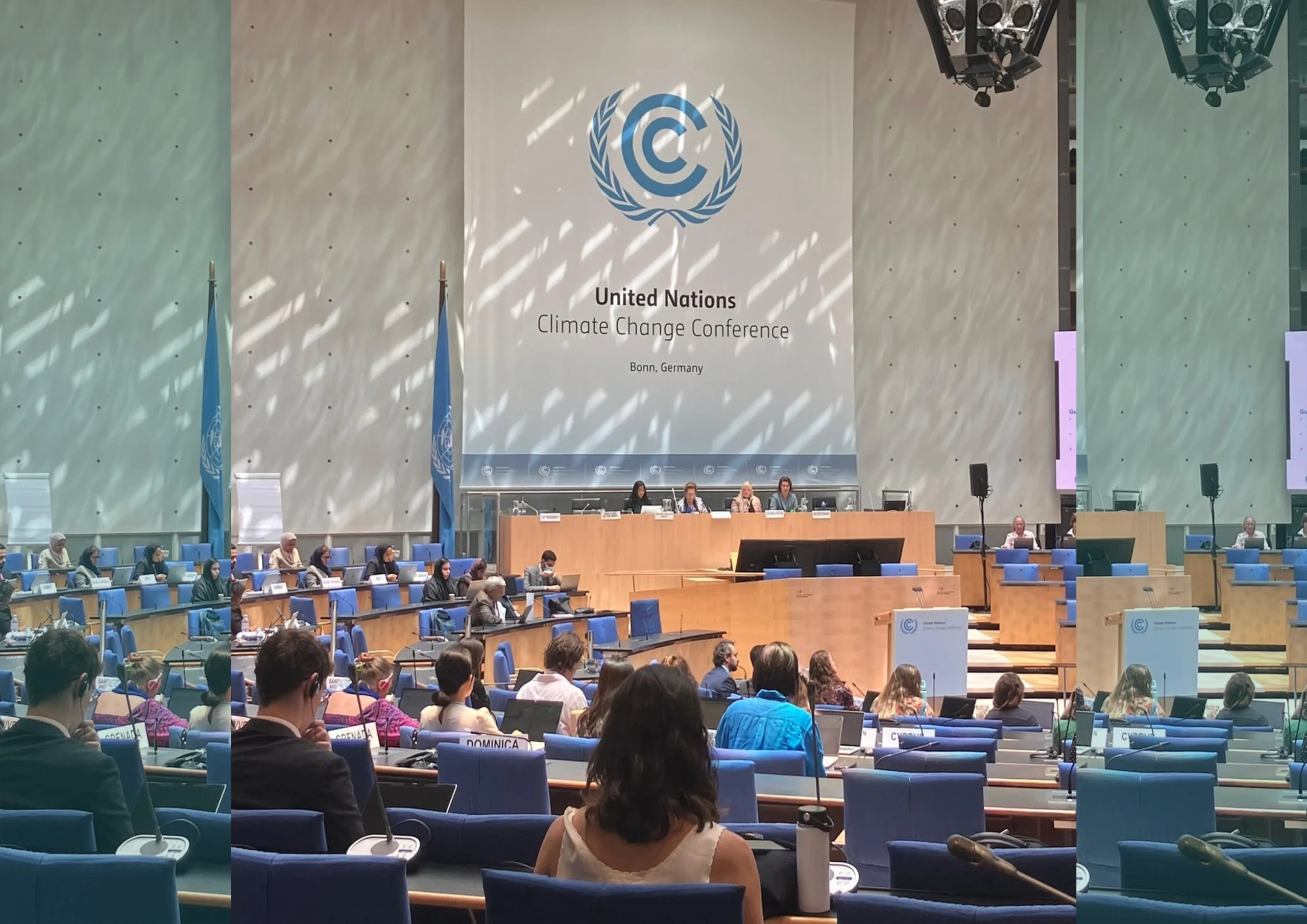
From 8 to 18 June 2026 at the World Conference Center in Bonn, Germany, SB64 brought together 9,206 participants, including 4,198 party delegates and 2,960 observers. This year, the Subsidiary Bodies quickly agreed on their agendas and began real negotiations on the first day. But the early progress faded, and after two weeks of tense talks, there were few concrete results as diplomats reached a stalemate.
Negotiators acknowledged that food systems are becoming more important in climate action and moved discussions under the Sharm el-Sheikh Joint Work on Agriculture and Food Security (SJWA) toward implementation. Still, the results did not address the root causes of the climate crisis or meet the urgent needs of frontline communities.
Agroecology remains marginalized
One good sign at SB64 was that more people recognized agriculture and food systems as central to climate action. Under the SJWA, discussions started to take a broader view, connecting food production, biodiversity, ecosystems, livelihoods, and climate resilience. Before the meetings, a webinar updated delegates on the secretariat’s work under the SJWA agenda. The second SJWA workshop focused on “Progress, challenges and opportunities related to identifying needs and accessing means of implementation for climate action in agriculture and food security.“
But this shift in conversation was not backed up by real political commitment or action. Even with strong evidence from farmers’ groups, scientists, and international organizations, SB64 did not support agroecology as the primary approach to transforming food systems. The final SJWA document produced by SB64 did not mention agroecology at all.
This lack of clarity is risky. Without a clear, rights-based definition, agroecology could lose its meaning and be used as a label for business-as-usual practices. Corporations can keep pushing “climate-smart agriculture,” digital agriculture, carbon farming, and other market-based approaches while keeping the same systems of monoculture, pesticide use, seed privatization, and corporate control that make agriculture vulnerable to climate change.
As we have repeatedly asserted, agroecology is a powerful approach based on biodiversity, ecological sustainability, traditional knowledge, gender justice, food sovereignty, and democratic control of food systems. It helps communities become more resilient, restores ecosystems, reduces the need for expensive external inputs, and gives farmers the power to lead change rather than just receive new technologies.
So, by not making agroecology central to changing agriculture, SB64 missed a big chance.
Corporate false solutions continue to advance
SJWA’s move from talking to taking action could have helped expand agroecological solutions. Instead, it may end up supporting a new wave of climate actions led by corporations.
During climate talks, powerful governments and big agribusinesses keep pushing technology and market-based solutions that do not really change the corporate food system. Precision agriculture, artificial intelligence, digital platforms, carbon markets, and offset schemes are often called climate solutions, even though there is growing evidence of their social and environmental problems. At SB64, the Center for International Environmental Law (CIEL) said it was “encouraging that, after more than three decades, the UNFCCC has begun to acknowledge concerns around the corporate capture of the process.” But recognizing the problem is not the same as taking action. Corporate groups also pressured the UNFCCC to weaken rules for carbon dioxide removal technologies under the Paris Agreement’s Crediting Mechanism (Article 6.4), downplaying worries about these untested technologies.
These solutions do not tackle the root causes of climate change. Corporate agriculture still relies on synthetic fertilizers, harmful pesticides, fossil fuels, monocultures, and the control of land, seeds, and markets by large companies. Instead of changing this system, many new solutions just add more technology while keeping the same power structures in place.
Carbon markets and offset schemes in agriculture often result in land grabbing, farmers going into debt, limits on traditional farming, and public money being used for private profit. Digital agriculture also raises major concerns about who controls data, increased surveillance, and companies taking over agricultural knowledge and decision-making.
If there are no strong protections, the plans emerging from SB64 could end up benefiting corporations rather than driving real climate action.
The silence on pesticides
One of the biggest problems with SB64 was the lack of substantive discussion about reducing the use of highly hazardous pesticides (HHPs) and synthetic chemicals. Looking at the official events and workshop agendas, there was no focus on reducing pesticides or phasing out HHPs. Civil society groups have long said that “national support for agroecology, and implementing pesticide reforms, are integral to climate action, and must be reflected in national reporting under the Paris Agreement.” Still, this message was mostly ignored in Bonn.
This lack of attention is especially worrying because there is clear evidence linking corporate agriculture, pesticide use, biodiversity loss, and climate change. Making and using synthetic fertilizers and pesticides depend heavily on fossil fuels and contribute significantly to greenhouse gas emissions. Pesticide-heavy farming also damages soil, pollutes water, harms pollinators, speeds up biodiversity loss, and puts people’s health at risk. Highly hazardous pesticides are “deemed by the international community as an issue of concern warranting international action,” with clear criteria set out by the FAO.
In the Asia-Pacific region, rural communities are already suffering from the harmful effects of pesticide use. Still, SB64 did not make agroecological pest management, reducing pesticides, or phasing out HHPs a priority for climate-resilient agriculture.
By not addressing this issue, the negotiations let pesticide-heavy farming continue while still being called climate action.
Climate finance remains inadequate
Another major problem with SB64 was the lack of real progress on climate finance. Money was the main issue that was not solved in almost every negotiation. For adaptation, just transition, mitigation, or loss and damage, developing countries kept saying that real action depends on getting finance, technology, and support to the countries and communities that need to act.
The negotiations on the Global Goal on Adaptation (GGA) ended without consensus. Many developing countries, particularly the Africa Group of Nations, drew a line in the sand. Their line was crossed when they failed to secure agreement from developed countries on the inclusion in the text of the tripling of adaptation finance, as promised at COP30 in Belém just seven months earlier. The GGA negotiations will now have to start from scratch at COP31 in Antalya. Many developing countries saw this outright rejection of the GGA text as a display of their built-up frustrations with the “complete lack of commitment and bad faith by developed countries to fulfill their legal obligation to provide climate finance“. As Jess Beagley, Policy Lead at the Global Climate and Health Alliance, observed: “During this week’s negotiations, developed countries seemed unable to recall their commitment to tripling adaptation finance by 2025 – a pledge they made just seven months ago at COP30“. The Union of Concerned Scientists condemned this as a “cruel blow to communities already reeling from extreme climate impacts“.
Small-scale food producers still struggle to access climate finance. Most funding systems are run by governments, big organizations, private investors, and large development groups, so the communities most affected by climate change get little direct help. During the Bonn meetings, discussions largely avoided finance and the practical steps needed to make things happen, focusing instead on technical details and indicators. Pooja Dave, Adaptation Policy Coordinator at Climate Action Network (CAN) International, said: “You cannot implement the GGA without finance. Yet continued attention was given to the technical processes, while progress on Adaptation finance remained limited.“
The ongoing focus on private finance and using multilateral development banks is worrying. These methods often put profits first, create new debt, and funnel money into large technology projects rather than supporting community-led efforts. The Pacific Islands Climate Action Network (PICAN) warned that SB64 would “be remembered as a negotiation that deferred rather than decided,” and said, “every delay means more lives disrupted, more communities at risk and a narrowing pathway to 1.5°C.“
Rich countries bear primary historical responsibility for climate change and must provide new, additional, public, and grant-based climate finance. Adaptation, loss and damage, and agroecological transformation cannot depend on market mechanisms or private investment alone. UNFCCC Executive Secretary Simon Stiell, in his closing statement, explicitly reminded Parties that commitments made at the first Global Stocktake—”on Loss and Damage; on 300 billion; on 1.3 trillion; on tripling adaptation finance; and more”—are “the baselines” that cannot be renegotiated or backslid upon. He condemned the “you-first-ism” that had paralyzed negotiations.
If public finance is neither accessible nor sufficient, climate justice will remain out of reach.
A just transition must address power and inequality
SB64 also showed ongoing problems in talks about just transition. Even though the term is used more often in the UNFCCC process, it could lose its meaning if it does not connect to the real issues rural communities face. A real just transition must address land rights, resource control, labor rights, gender justice, corporate power, and the livelihoods of small food producers.
Unlike the adaptation negotiations, just transition did see some positive movement. The negotiations produced a text outlining functions and modalities for a future Just Transition Mechanism. UNFCCC’s Stiell noted in his closing statement that “on just transition, you took important steps towards turning the promise of the just transition mechanism into a reality, and to set up the review of the just transition work program“. As James Trinder, international climate policy coordinator at CAN Europe, observed: “Bonn showed that Just Transition is not a side issue, it is central to whether climate action can be delivered at the speed and scale required, without anyone being left behind“.
Still, this progress was limited and mostly procedural. The talks established terms of reference and began laying the foundation for COP31, but did not provide the real resources or governance needed to make a just transition possible for frontline communities. As Jacobo Ocharan, Head of Political Strategies at CAN International, said: “Governments arrived in Bonn talking about implementation, but too often they killed time by talking about process. The debate over climate action has changed. The debate over who pays for it, governs it, and delivers it has not.“
The climate crisis is deeply connected to bigger issues of inequality and exploitation. Land grabbing, extractive development, corporate control in agriculture, and trade rules that help multinational corporations all weaken rural communities. Local governments, as the Local Governments and Municipal Authorities (LGMA) group said at SB64, are “the closest to food insecure communities and uniquely placed to ensure that national commitments are translated into locally responsive implementation.” But they are still excluded from decisions about the Just Transition Mechanism.
Climate policies that do not tackle these deep injustices will not lead to real change.
Looking ahead: COP31
As talks move toward COP31, governments have a basic choice. They can keep making small changes that help big agribusiness and keep corporate agriculture in place, or they can choose a bold new direction based on agroecology, food sovereignty, and climate justice.
The political situation during SB64 was tougher than ever. The blockade in the Strait of Hormuz disrupted global oil and food supplies and prices. At the same time, the World Meteorological Organization warned that El Niño would be especially strong, causing more drought and heavy rain. The talks were also hurt by efforts to remove references to the best available science from the UNFCCC process. Dr Sindra Sharma, International Policy Lead at PICAN, said: “The Pacific came to Bonn defending science because science is our floor of consequence. Without it, ambition becomes optional, and justice becomes negotiable. We reject both.“
The way ahead is clear. Science shows that agroecology should be at the heart of climate adaptation and mitigation, biodiversity restoration, and food security. Highly hazardous pesticides (HHPs) must be phased out, as already being demanded by other international agreements, notably the Global Framework on Chemicals (GFC), which calls for the phase-out of HHPs in agriculture by 2035, where safer and affordable alternatives are available. Public climate finance needs to go to small-scale food producers and community-led projects. Farmers, Indigenous Peoples, women, fisherfolk, and rural communities must have a real say in decisions. Developed countries must meet their past promises and provide enough resources for a just transition.
SB64 showed that people are paying more attention to food systems in climate talks. But just being aware is not enough. Without a clear move toward people-led agroecology and climate justice, the world could end up keeping the same systems that caused the climate crisis in the first place.
Farmers, Indigenous Peoples, women, and grassroots communities around the world already have real solutions. The problem is not a lack of options. The real question is whether governments will stand up to corporate power and support the changes needed for climate justice. As PICAN said, “We must stop managing the politics of climate change and start addressing the reality of it. The Pacific is demanding action that matches the scale of the crisis in full recognition that the window to deliver is narrowing. Fast.” ###