
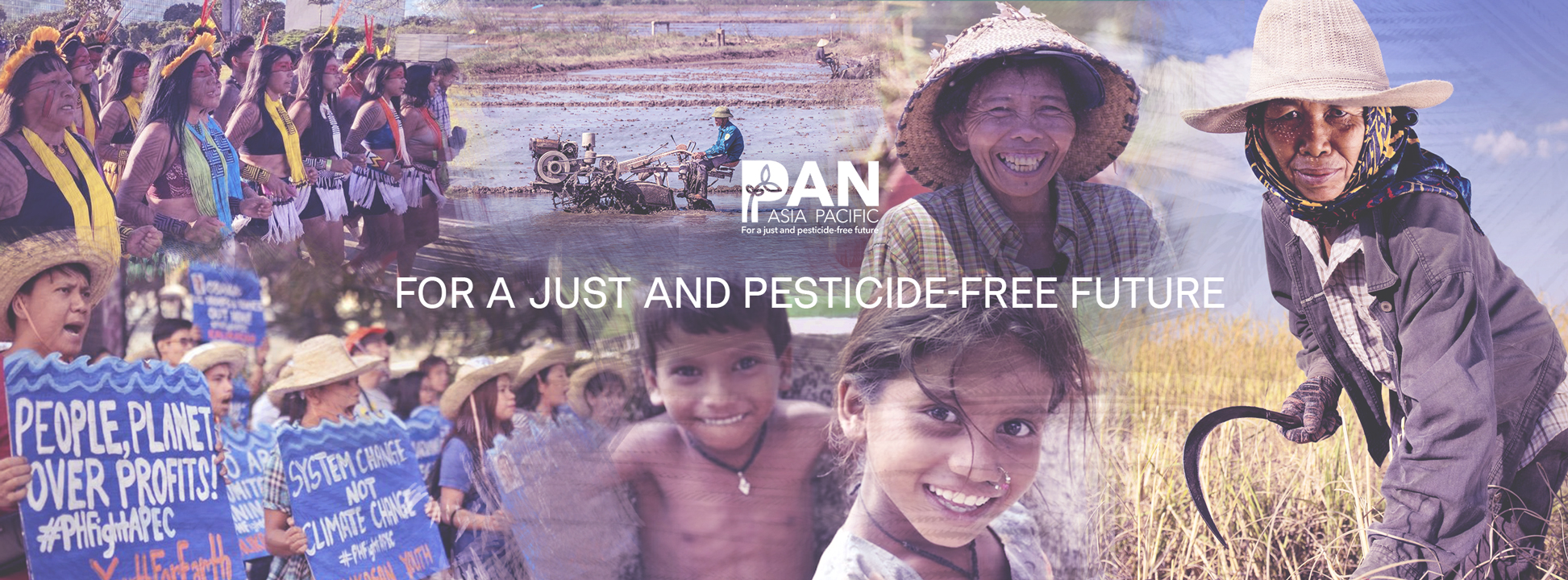
The 16 Days of Global Action on Agroecology is PAN Asia Pacific’s (PANAP) annual grassroots-led campaign, held from October 1 to 16. It brings together farmers, rural women, youth, Indigenous Peoples, rural communities, small food producers’ movements, civil society organisations and agroecology advocates to resist corporate-controlled agriculture and advance agroecology, food sovereignty and climate justice.
Across Asia and the Pacific, Africa and Latin America, rural communities continue to confront hunger, poverty, landlessness, toxic pesticide exposure and escalating climate impacts. These are deeply rooted in a corporate food system that concentrates control over land, seeds, markets and resources; promotes agrochemicals, industrial monocultures and other profit-driven technologies; and marginalises the people who produce food. For rural peoples, hunger amid plenty is a profound injustice. Radical food systems transformation requires food sovereignty, genuine agrarian reform, people’s control over resources and the expansion of people-led agroecology.
In 2026, the campaign will foreground rural women and women farmers in solidarity with the International Year of the Woman Farmer 2026. The United Nations (UN) designated 2026 as the International Year of the Woman Farmer to recognise women’s indispensable yet often overlooked contributions across agrifood systems and to promote action on persistent inequities in land, finance, services, technology, education and decision-making. This global observance is an important opportunity, but it must go beyond recognition. Rural women must be heard as rights-holders, food producers, knowledge holders, organisers, workers and leaders in the struggle for food, land and climate justice.
Rural women are at the heart of food production, biodiversity conservation, seed saving, processing, marketing, care work and community survival. Yet they disproportionately bear the burdens of landlessness, insecure work, unpaid care, pesticide exposure, discrimination and climate disasters. The Food and Agriculture Organisation (FAO) notes that women farmers face heavier workloads and unequal access to land, services, capital and technology, with climate shocks further intensifying their work burden.
These inequalities are compounded by neoliberal economic policies pushed by multilateral institutions like the International Monetary Fund (IMF) and the World Bank, whose structural adjustment programs and debt conditions force fiscal austerity measures and debt-related conditions that cut public spending on essential social protection and rural services, while driving the commercialization of agricultural lands and resources. Consequently, women farmers bear the disproportionate share of the brunt of reduced public investment, privatized services, and market deregulation that undermine local food systems, displace local food producers and heighten rural poverty.
Further aggravating the condition of rural women is their exclusion from social protection. PANAP’s current work calls for universal, gender-transformative social protection anchored in rural women’s rights to land and resources, safe and dignified work, and climate justice. Social protection must not be treated as charity or a short-term safety net. It is a right and a foundation for rural women’s security, resilience, autonomy and meaningful participation in community and political life.
Agroecology is the people-led alternative. It enables communities to produce healthy food, reduce dependence on highly hazardous pesticides, protect soil and water, conserve biodiversity and strengthen collective resilience. It is not merely a set of farm practices: agroecology is rooted in the rights of peoples to define their own food and agriculture systems. It demands control over land, seeds, water and territories; strengthens women’s leadership; and rejects false climate solutions that deepen corporate control and dispossession.
The 2026 16 Days campaign will build solidarity and action towards a future where rural women can exercise their rights, lead agroecological transformation and live free from hunger, toxic pesticides, violence, exploitation and climate injustice. The campaign will culminate on October 15, International Day of Rural Women, and October 16, World Hunger Day, with PANAP’s people-centred framing of World Food Day that exposes the continuing reality of hunger under an unjust food system.
Overall goal
To advance rural women’s leadership, rights, social protection and collective power in building people-led agroecology, food sovereignty and climate justice, while challenging corporate control over food, land, seeds and natural resources.
Objectives
- Raise awareness among rural and urban communities about the central role of rural women and women farmers in advancing agroecology, food sovereignty, social protection and climate justice.
- Strengthen women-led and community-led agroecological practices through collective farming, farmer-to-farmer learning, seed exchanges, local markets, cultural actions and knowledge sharing.
- Build broad solidarity among women, youth, farmers, Indigenous Peoples, workers and civil society for food, land, labour, social protection and climate justice.
- Contribute to the push for immediate and long-term policy changes, from local to international levels, that secure women’s rights to land and resources, decent and dignified work, universal gender-transformative social protection, genuine agrarian reform, the phase-out of highly hazardous pesticides, and public support for people-led agroecology.
- Amplify grassroots voices during the International Year of the Woman Farmer 2026, ensuring that rural women’s demands, not corporate interests, shape food, agriculture, labour, social protection and climate policies.
Main calls and demands
- Women farmers and rural peoples unite for food, land, social protection and climate justice!
- Agroecology and food sovereignty for climate justice now!
- Land, seeds, water and resources for rural women and peoples, not corporations!
- Universal, gender-transformative social protection; land rights and dignified work for rural women!
- Support and subsidise people-led agroecology; end corporate agriculture and false climate solutions!
- Phase out highly hazardous pesticides and build pesticide-free, healthy communities!
- Fight for just, equitable, healthy and sustainable food systems!
- Reject IMF-World Bank policies that undermine rural women’s rights, livelihoods and welfare!
Partners and communities are encouraged to adapt these calls to local realities and advance their own demands for land, labour, gender, environmental, social protection and climate justice. Partners are also urged to translate these calls into their local language/s.
How partners can join
- Partners may organise an activity at any time from October 1 to 16, led by rural women and carried out in line with the campaign objectives. Possible activities include:
- Women-led farm visits, collective farming, farmer learning exchanges and agroecology trainings
- Seed exchanges, community seed banks, food festivals and pesticide-free local markets
- Community discussions, policy fora and workshops on women’s land rights, labour rights, social protection, agroecology and climate justice
- Participatory documentation of rural women’s experiences of insecure work, climate shocks, pesticide exposure and exclusion from social protection
- Cultural activities, storytelling, photo exhibits, murals, rallies, bike tours and solidarity actions
- Policy advocacy calling for land rights, agrarian reform, safe and dignified work, universal gender-transformative social protection, the phase-out of highly hazardous pesticides and public investment in people-led agroecology
- Community testimonies (written, audio or video) answering: “How does agroecology strengthen rural women and communities in the face of the food and climate crisis?” And send your testimonies to diana.bando@panap.net and info@panap.net. These will be published at the PANAP website and social media platforms.
- Partners may use campaign posters, placards, and digital materials; share photos and videos of their actions; mobilise and tag us on Facebook & Twitter (@PANAsiaPacific) and Instagram (@justpesticidefreeasia)! using the hashtags #16DaysofGlobalAction #WomenRiseUp #AgroecologyNow #FoodSovereignty #SocialProtection #ClimateJustice.
Suggested activity flow
| Dates | Suggested focus |
|---|---|
| Oct 1 | Campaign launch; women farmers’ and rural communities’ calls for food, land, and climate justice |
| Oct 2-7 | Agroecology learning exchanges, collective farms, seed actions and community education |
| Oct 8-14 | Public forums, cultural activities, markets and policy advocacy on land, labour and social protection |
| Oct 15 | International Day of Rural Women: women-led actions, testimonies and demands |
| Oct 16 | World Hunger Day: collective action for food sovereignty, agrarian reform, agroecology and social protection |
Rural women are not merely beneficiaries of development or symbols of resilience. They are agents of transformation. In 2026, let us stand with women farmers and rural peoples as they lead the struggle for agroecology, food sovereignty, social protection and climate justice—now.





 Pesticide Action Network Asia Pacific