
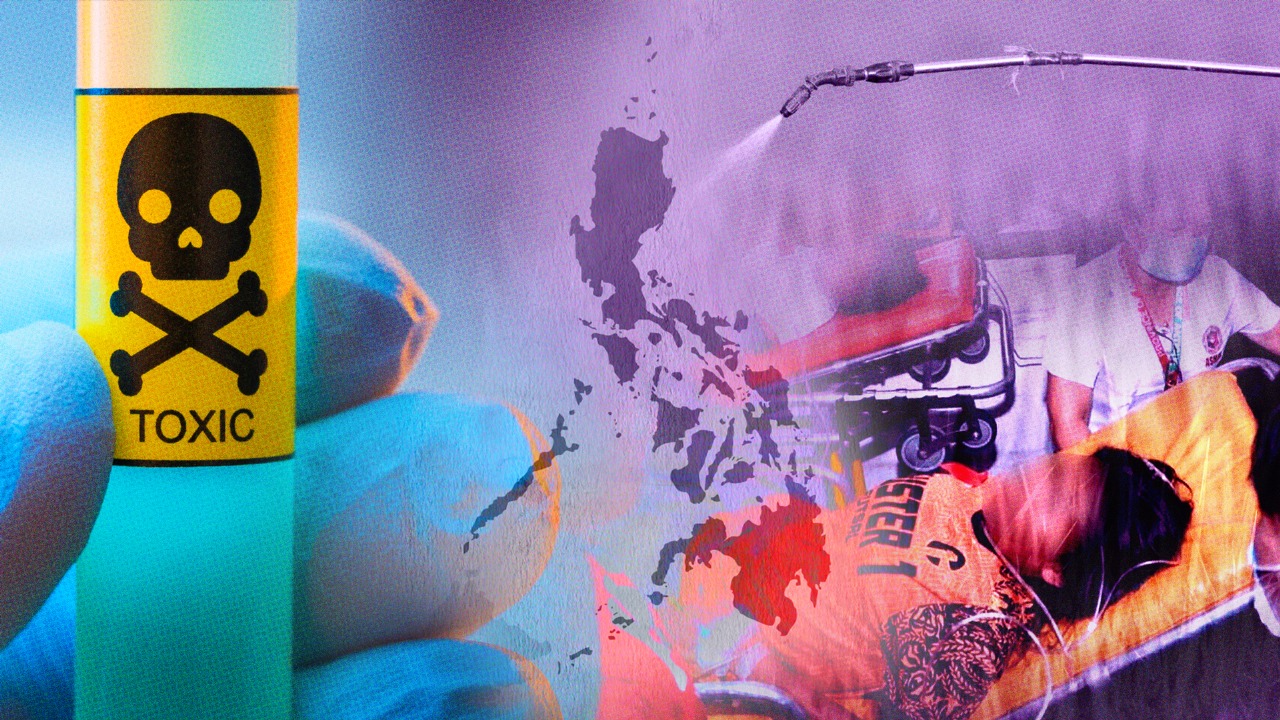
PENANG, Malaysia – A fact-finding mission (FFM) into the widely reported mass pesticide poisoning at a rural Philippine high school has identified major systemic failures that allowed the tragedy to happen and hindered the official response.
Released today by PAN Asia Pacific (PANAP) as part of its No Pesticide Use Week 2025 campaign, the initial findings highlight the presence of a highly hazardous pesticide, insufficient regulations, and chronic underfunding of public services as the root causes of the July incident that poisoned 390 people, most of them children.
On the morning of July 2, 2025, residents near Pis-anan National High School in the town of Sibalom, Antique province (about 1,000 kilometers south of the capital Manila), reported a strong, guava-like odor. Within hours, students started collapsing with symptoms like dizziness, vomiting, trouble breathing, and temporary loss of consciousness. The school was quickly evacuated, and face-to-face classes were canceled for a month as the community handled the crisis.
The fact-finding mission, conducted from November 11-14 by PANAP and its Philippine partner MASIPAG Visayas, gathered testimony from victims, families, and local officials. Of the 390 affected individuals, 298 were teenagers aged 13-18, and 79 were children aged 7-12. Most were students from a specific building where the toxic substance was later detected.
Cypermethrin identified, source remains unknown
Laboratory analysis of environmental samples, delayed by a month because they had to be sent to a university in Manila, confirmed the presence of cypermethrin on classroom walls, doors, and plants. Classified by PANAP as one of the “Terrible Twenty” pesticides most toxic to children, cypermethrin is highly toxic and linked to neurotoxicity, respiratory distress, and long-term health risks.
Despite confirming exposure, the official investigation failed to identify the source of the cypermethrin contamination. However, it revealed that the school had carried out uncoordinated herbicide applications in June, in violation of protocols. Although the school had gallons of “Rub Out” herbicide, which does not contain cypermethrin, the report notes that a delayed surrender of spray equipment undermined the investigation.
The response highlighted both community solidarity and institutional inadequacy. While local teachers, village officers, and neighboring municipalities acted swiftly, responders lacked training and personal protective equipment. Medical officers emphasized the urgent need for capacity-building for mass chemical incidents.
Crucially, victims and families reported a lack of follow-up information or education on poison management once lab results were known, leaving them in the dark about the specific chemical threat and its long-term implications.
Calls for immediate and long-term action
The tragedy in Pis-anan is not an isolated incident but a sign of systemic failures. The Philippines, ranked 30th worldwide in pesticide imports, allows the use of many pesticides banned elsewhere due to weak regulatory systems. The country’s historical dependence on chemical-intensive agriculture, promoted since the Green Revolution, has entrenched dangerous pesticides in the domestic market.
This economic paradigm, combined with chronic underfunding of social services like education and healthcare, creates precarious conditions. Schools, already dealing with limited budgets, must handle pest control on their own, while staying vulnerable to pesticide drift from nearby farms.
In response to the incident, the local government has taken initial measures, issuing an ordinance to regulate pesticide use and drafting legislation to strengthen safety standards. Requests have been made for national agencies to provide training and carry out pesticide inspections.
Beyond these immediate measures, PANAP reiterated its call to: (1) Establish mandatory pesticide-free buffer zones of at least 1 kilometer around all schools; (2) Enact a comprehensive ban on highly hazardous pesticides (HHPs), starting with those already banned in other countries; (3) Overhaul agricultural policies to support farmers in transitioning to agroecological practices and non-chemical alternatives; and (4) Prioritize children’s health by ensuring strict enforcement of existing regulations and guaranteeing the right to a toxic-free environment as outlined in the Convention on the Rights of the Child.
“This preventable tragedy exposes a system that favors profit over people,” said PANAP Executive Director Sarojeni Rengam. “Our children’s right to a healthy life must come first. We stand with the Filipino people in calling for immediate action to ban HHPs and build a just, pesticide-free future for the next generation,” Rengam added.
PANAP’s annual No Pesticide Use Week campaign, taking place from December 3-10, mobilizes the network’s partners and their communities to raise awareness about the risks of pesticide dependence and promote agroecological alternatives.
PANAP and MASIPAG Visayas will publish the full fact-finding report soon. ###
Reference: Sarojeni Rengam, Executive Director (sarojeni.rengam@panap.net)


 Pesticide Action Network Asia Pacific