
PENANG, Malaysia – Regional advocacy group PAN Asia Pacific (PANAP) today urged governments to not just ensure that immediate financial relief are provided to agricultural workers impacted by the COVID-19 pandemic, but to respect and promote their rights based on already globally recognized and established labor standards.
“Upholding labor standards that guaranteeing the rights and welfare of agricultural workers is more urgent amid the havoc being wrought by COVID-19 on people’s health and the global economy, including in the food and agriculture sector. These include decent wages and employment contracts; sufficient compensation even under lockdown or quarantine; benefits such as health insurance and social protection, housing, etc.; and occupational safety and health. Such labor standards are embodied in various instruments and tools adopted by the International Labor Organization (ILO) as well as by the UN human rights system,” said Arnold Padilla, PANAP Food Sovereignty Programme coordinator.
PANAP made the appeal as it joined the rest of the world in commemorating the International Labor Day today at a time of intensifying public health and economic crises that could immediately wipe out 1.6 billion livelihoods worldwide.
The impact would be harshly felt by many poor countries where agriculture accounts for more than 60% of employment and up to two-thirds of domestic economic production. They include workers involved in export-oriented, labor-intensive, corporate plantations that serve the needs of rich, industrial countries, where the pandemic brought production and consumption to a grinding halt.
The Penang-based group noted that even prior to the pandemic and despite the existence of international conventions and national labor laws that are meant to safeguard their rights and welfare, agricultural workers are already among the most oppressed and exploited sectors that suffer one of the lowest wages and severest poverty. Based on official data, up to 25% of agricultural workers are extremely poor.
Migrant agricultural workers, many of them undocumented, are especially vulnerable as they are unprotected by labor laws even as they comprise a significant part of agricultural labor. For instance, about 10% of all farmworkers in the US are so-called seasonal guest workers.
“Agricultural workers are constantly exposed to some of the worst occupational and safety hazards, including agrochemical poisoning and killer diseases. Workers’ conditions at these factory farms – cramped housing and transportation; unsanitary workplaces; lack of protective equipment, etc. – provide a conducive environment for pandemics to break out,” Padilla said.
Whether they are hired in chicken and pig industrial farms or massive monocrop plantations, agricultural workers are highly vulnerable to deadly infections from animal pathogens. To illustrate, among the worst clusters of COVID-19 cases in North America now are meat processing plants operated by Cargill and Smithfield, two of the world’s largest agribusiness companies, where more than 1,300 workers have been reportedly infected.
PANAP also added that part of protecting the rights and welfare of agricultural workers amid the COVID-19 crisis is the provision of immediate economic relief. “Unfortunately, many governments, rich and poor alike, are failing even in this minimum obligation. Worse, some are using the pandemic to further oppress and exploit the agricultural workers,” Padilla said.
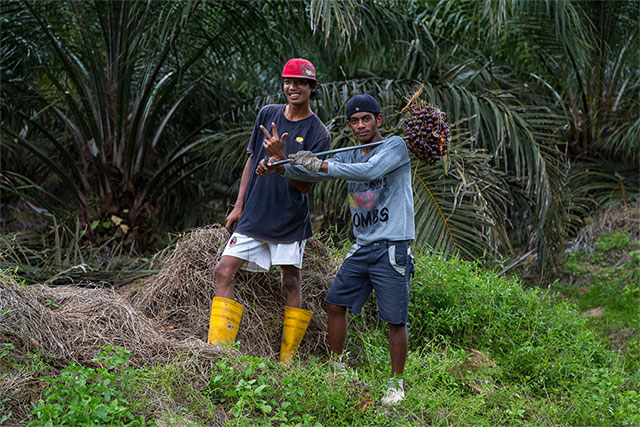
In the Philippines, for example, just 6% of sugar plantation workers in the country are covered by government’s financial assistance program, which is even notoriously delayed, based on several accounts. In Malaysia, many migrant workers working in palm oil plantations have not been paid since February due to work suspensions and have not received sufficient aid. Meanwhile, American agriculture officials are proposing to reduce the wage rates of migrant farmworkers to fund the bailout of big industrial farms in the US.
“If there is a ‘new normal’ that the COVID-19 crisis should breed, it is one that defends and advances the collective interests of agricultural workers and all toiling peoples whose calloused hands build and feed societies,” Padilla concluded. ###
For inquiries, please contact nolandnolife@panap.net






 Pesticide Action Network Asia Pacific
Discussion about this post